
01
Traditional bridge
Uses crowns on the teeth next to the gap to hold a false tooth in place. This is the most common type and works well when the teeth on either side are healthy and strong.
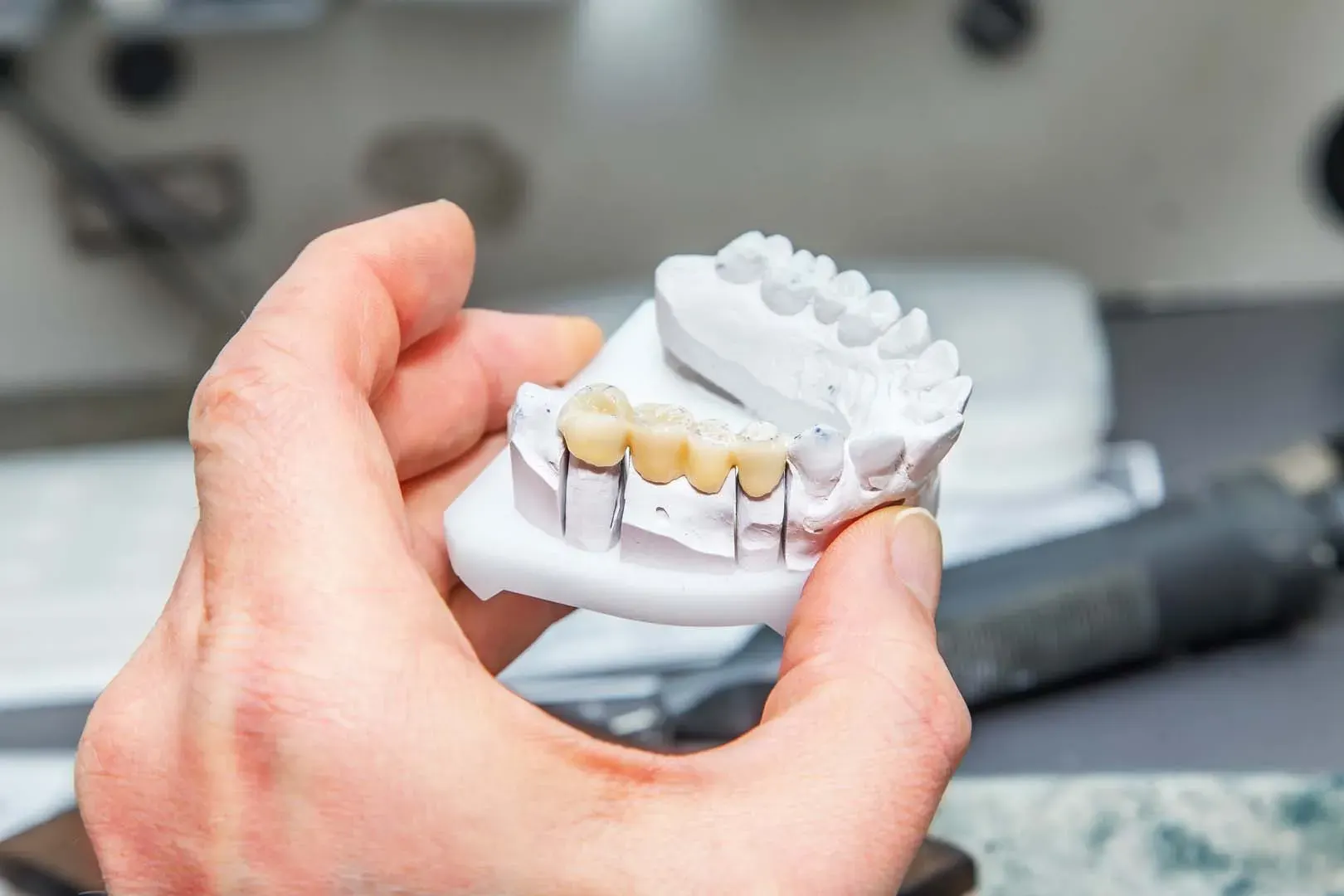
Missing a tooth changes more than the way your smile looks. It can affect how you chew, how the rest of your teeth line up, and how comfortable you feel speaking or laughing around people you know. Clark Dental provides dental bridges Salisbury NC patients turn to when they want a fixed, natural-looking way to close that gap. We accept Blue Cross Blue Shield, Cigna, and Delta Dental, and we're welcoming new patients from Salisbury, China Grove, and Spencer who are ready to talk about their options. As part of our restorative dentistry services, Dr. Chris Clark takes the time to walk through what a bridge involves before you commit to anything. Have a question before you book? Contact Us
A dental bridge replaces one or more missing teeth with a fixed restoration anchored to the healthy teeth (or implants) on either side of the gap. For many patients, that means restored chewing function on both sides of the mouth, teeth that stay put instead of drifting into open space, and a result that looks and feels like your natural smile.
Bridges also tend to move faster than implant treatment, often wrapping up in two appointments rather than a process spread across several months. That shorter timeline matters for patients who want the gap closed sooner, and it's also a solid option for patients who aren't candidates for implant surgery because of bone loss or other health factors.
We build treatment plans around real value, not just the lowest sticker price. If cost is part of your decision, we accept Blue Cross Blue Shield, Cigna, and Delta Dental, and we offer financing through CareCredit and Cherry so a bridge stays within reach.
Uses crowns on the teeth next to the gap to hold a false tooth in place. This is the most common type and works well when the teeth on either side are healthy and strong.
Anchors to a healthy tooth on just one side of the gap, which can be a good fit when there's only one neighboring tooth available.
Anchors to dental implants instead of natural teeth, which protects the surrounding teeth from being reshaped and can offer added long-term stability.
If you're comparing dental bridges Salisbury NC options, understanding the process can help you feel more confident booking a consultation.
Getting a bridge at our office generally takes two visits. At the first appointment, Dr. Clark prepares the anchor teeth, takes a digital impression with our iTero scanner (no messy trays), and fits you with a temporary bridge so you're never left with a gap in the meantime. We also use intraoral cameras during this visit so you can see exactly what we see and understand the plan.
Once your permanent bridge is ready, you come back for a second appointment where Dr. Clark checks the fit, adjusts your bite as needed, and permanently places the finished restoration. Most patients are in and out in under an hour for each visit.
Both a bridge and a dental implant can replace a missing tooth well, and the right choice depends on your timeline, budget, oral health, and long-term goals. Neither option is automatically "better," they solve the same problem in different ways.
| Feature | Dental Bridge | Dental Implant |
|---|---|---|
| Treatment timeline | 2 appointments | Multiple appointments over months |
| Bone preservation | Does not preserve jawbone | Preserves jawbone |
| Adjacent teeth affected | Yes, anchor teeth are shaped | No, standalone restoration |
| Upfront cost | Generally lower | Generally higher |
| Insurance coverage | Typically covered | Coverage varies |
| Longevity | 10 to 15 years with care | 20+ years with care |
| Bone graft required | No | Sometimes |
For many patients, an implant is the stronger long-term investment because it preserves jawbone and doesn't rely on neighboring teeth. But a bridge is a proven, accessible option with a shorter path to a finished smile, and it may be the more practical choice if you're not ready or not eligible for implant surgery. Dr. Clark will talk through both with you honestly so you can decide what fits your mouth, your schedule, and your budget.
The cost of a dental bridge depends on the type of bridge, how many teeth it replaces, and your insurance coverage. Because every case is different, we don't publish set prices online, but we can give you a personalized estimate once Dr. Clark has examined your teeth.
We accept Blue Cross Blue Shield, Cigna, and Delta Dental, and most plans provide some coverage for a bridge since it's considered a standard restorative treatment. For anything insurance doesn't cover, we offer financing through CareCredit and Cherry to help spread the cost into manageable payments. Visit our insurance and financing page for more detail, or call our office and we'll walk you through what to expect for your specific situation.
Call Us: (704) 637-0773 to ask about coverage or schedule a consultation.
With good home care and regular checkups, a dental bridge typically lasts 10 to 15 years, and some last longer. Keeping the anchor teeth healthy through daily brushing, flossing under the bridge, and routine cleanings is what makes the biggest difference.
Most patients feel little to no discomfort during the procedure since we use local anesthesia while preparing the anchor teeth. Some mild sensitivity is normal for a day or two afterward, and it typically resolves on its own.
Yes. Once your permanent bridge is placed, you can eat most foods normally. We usually recommend easing back into harder or sticky foods for the first few days while you adjust to the new fit.
Many insurance plans, including Blue Cross Blue Shield, Cigna, and Delta Dental, provide partial coverage for dental bridges since they're a standard restorative treatment. Coverage amounts vary by plan, so we recommend calling our office to verify your specific benefits before treatment.
It depends on how many teeth are missing and where they're located. A bridge works best for one or a few teeth in a row with healthy anchor teeth nearby; if you've lost several teeth across your mouth, dentures or partials may be a better fit. Dr. Clark can evaluate your mouth and recommend the option that makes the most sense.
Dr. Clark and our team are here to answer your questions, check your insurance, and help you decide if a dental bridge is the right next step. There's no pressure, just an honest conversation about your options.